
White Papers
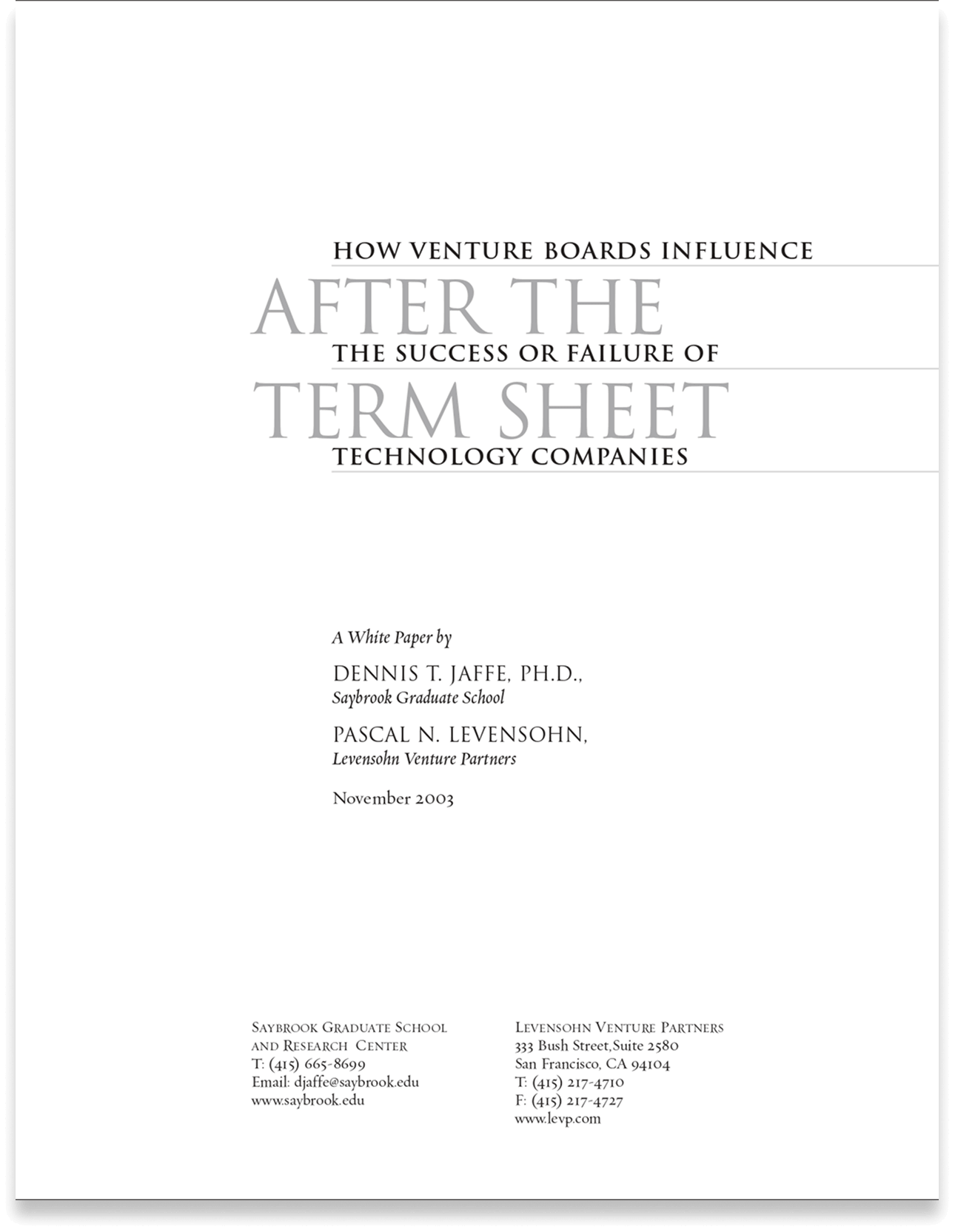
Pascal has written white papers on corporate governance and venture capital for more than two decades, beginning with After the Term Sheet in 2003. His papers take a pragmatic, actionable approach to director behavior and accountability, examining how both affect board effectiveness in venture-backed companies.
Working with other thought leaders, Pascal also analyzes the policy conditions that can promote robust innovation economies. His work has been produced in collaboration with venture capitalist co-investors, entrepreneurs, legal and accounting practitioners, and leading international academics from institutions including Renmin University of China, Stanford University, Harvard University, and Cambridge University.
In 2026, Pascal was appointed a Fellow at the Cambridge Judge Business School.
White Papers
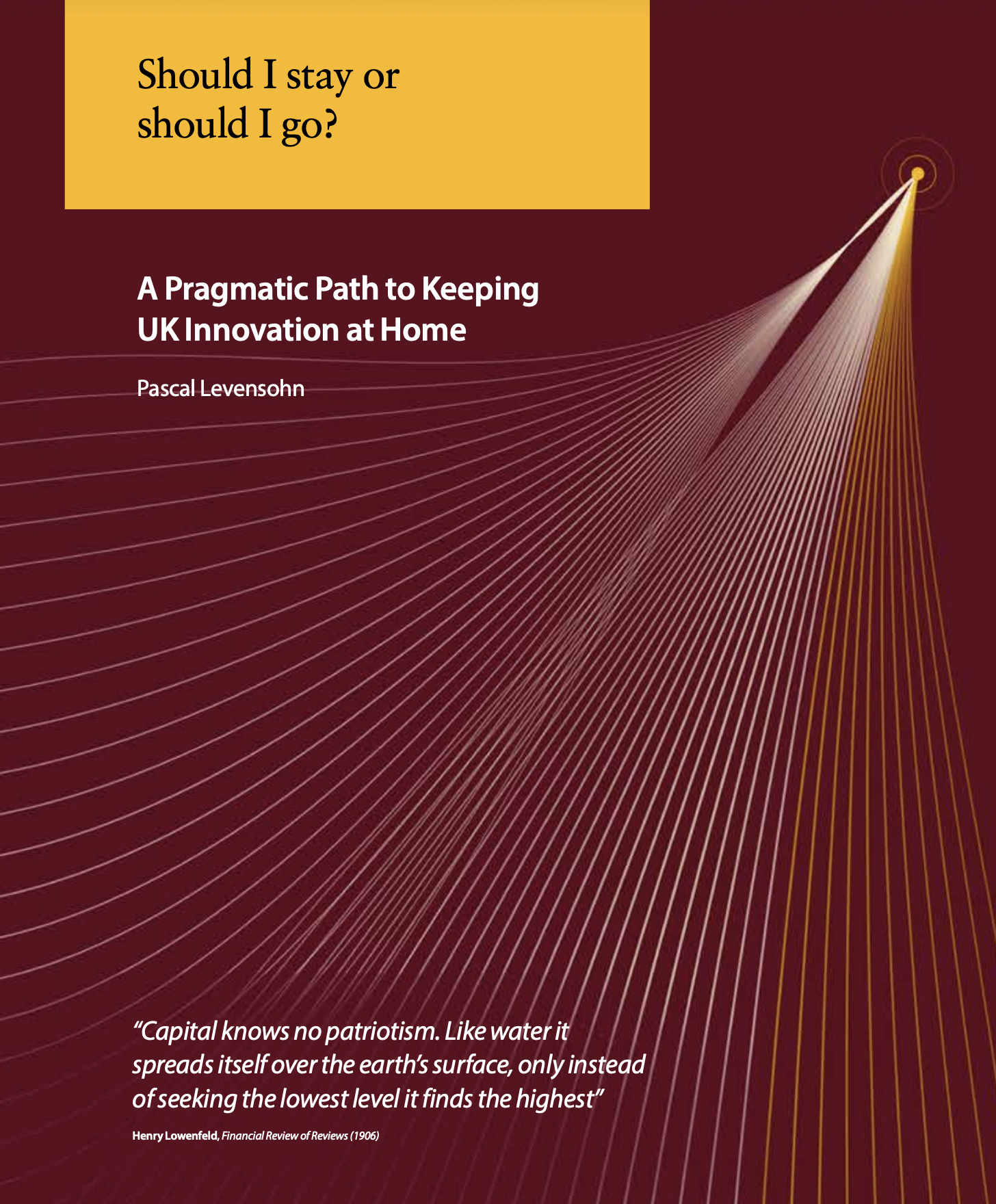
Should I Stay or Should I Go? A Pragmatic Path to Keeping UK Innovation at Home
Pascal Levensohn | October 2026
When promising UK technology and life sciences companies migrate abroad, Britain can lose jobs, laboratories and research capability. This paper proposes a practical response: negotiated commitments requiring investors or acquirers to maintain a defined UK presence for a fixed period. Covering headcount, laboratories, R&D and payroll, these commitments would be voluntary to enter into, but binding and enforceable once made—and could be implemented without lengthy, complex legislation.
The Core Argument
•Productive capability—not foreign ownership—is the central concern. The paper distinguishes three forms of migration: ownership and financial returns; domicile and listing venue; and productive capability. Only the third represents an avoidable national loss.
•Two distinct debates have been conflated. The health of the UK’s capital markets and the strength of its innovation ecosystem are separate questions. A commercial solution can retain investment and high-quality jobs in the UK while the broader capital-markets debate continues.
•There is a proven precedent. SoftBank’s binding undertakings when it acquired ARM in 2016 were later verified as honoured. ARM’s 2023 Nasdaq listing also demonstrates that changing a company’s listing venue does not necessarily mean losing UK productive capability.
•The economic opportunity is measurable. If 20 of the roughly 40 UK deep-tech companies acquired each year negotiated commitments that created 25 net new UK jobs, the programme would generate an estimated £312.5 million in additional annual gross value added by year five—and £2.5 billion cumulatively over ten years.
•The practical objections can be addressed. The paper examines potential effects on valuations and bidder numbers, the risk of renegotiation or quiet abandonment, and the fact that the enforceable model currently applies only to public takeovers. It identifies this final issue as the central design challenge and outlines commercial instruments that could close the gap.
From Proposal to Practice
The paper calls for a small, authoritative Retention Task Force comprising founders, investors, acquirers, M&A counsel, universities, policy experts and innovation clusters—including voices from beyond the Oxford–Cambridge–London triangle. Its mandate would be clear: make footprint retention standard market practice.
Acknowledgements
I am grateful to Professor Gishan Dissanaike, Dean of Cambridge Judge Business School; Dr William H. Janeway; Jason Pontin, DCVC; Riyad Daud; Dr Aga Iwasiewicz-Wabnig, Maxwell Centre; and Dr Kathryn Chapman, CEO of Innovate Cambridge. Trang (Julia) Nguyen provided research assistance.
Rites of Passage
English, Hebrew, and Arabic versions. A candid examination of the challenges associated with replacing founding CEOs in startups, why it happens so often, and how to do it right.
A Simple Guide to Director Responsibilities for VC-Backed Companies
A comprehensive review of the practical and fiduciary responsibilities of startup directors. Do you know your fiduciary duties and the liabilities for failing to exercise them responsibly? Find the answers here.
After the Term Sheet
A venture capitalist’s real work begins after the investment is made. Find out what is expected, and required, of VCs who truly add value to their portfolio companies.
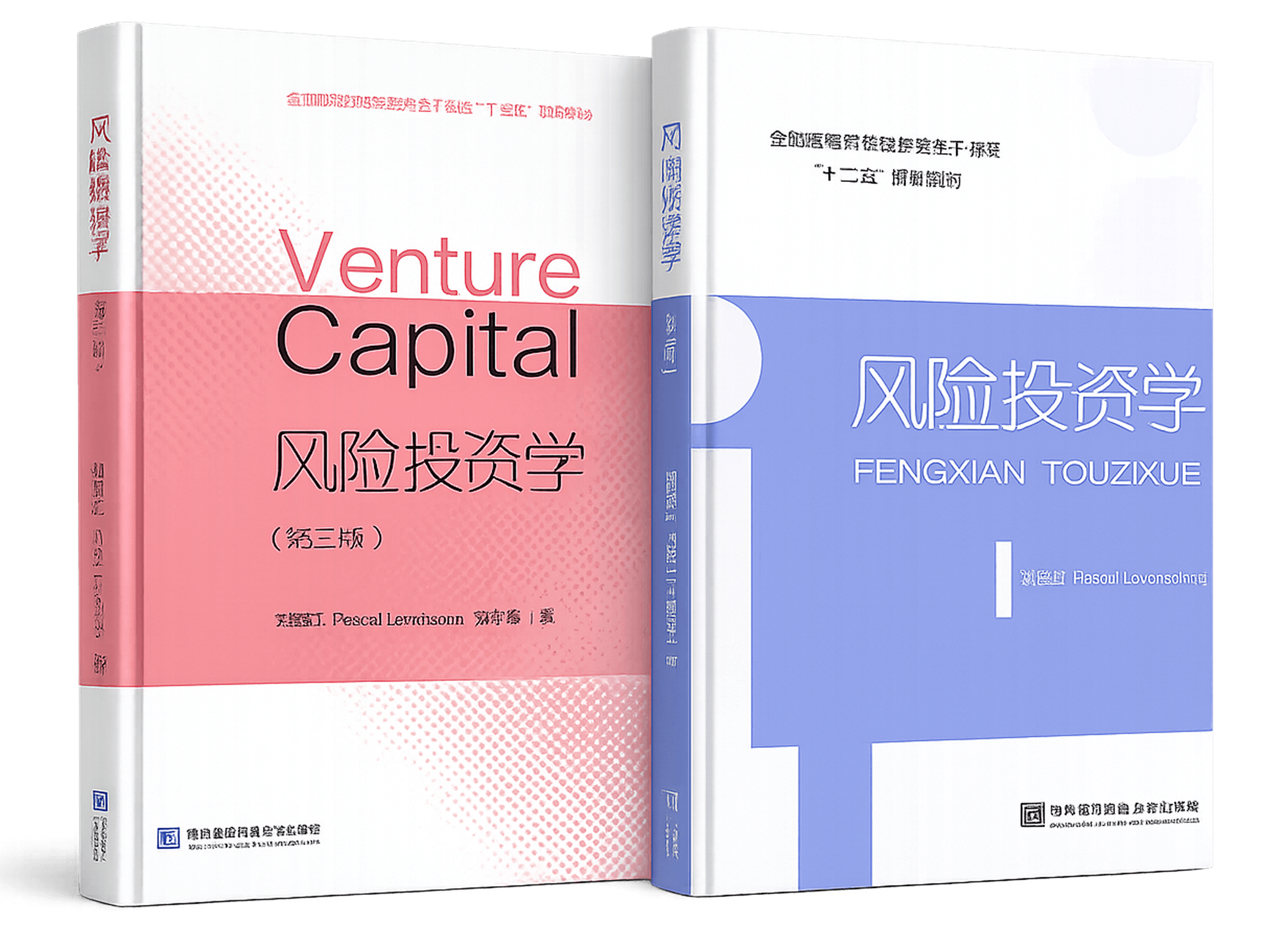
The First Chinese Undergraduate Textbook on Venture Capital
(1st Edition 2011, 2nd Edition 2018)
Pascal’s multi-year collaboration with Professor Manhong Mannie Liu of Renmin University of China began in the summer of 2007, when they met at Harvard Law School’s Symposium on Building the Financial System of the 21st Century between China and the United States, sponsored together with CDRF (China Development Research Foundation) and PIFS (the Program on International Financial Systems).
The resulting Chinese textbook is categorized as part of “China’s National College Major Investment Textbook Series for the Twelfth Five-Year Plan.” First released in 2011 and republished in an expanded second edition in 2018, the book covers the venture capital concept, entrepreneurship, fundraising, business plan construction and analysis, investment due diligence, post-investment monitoring, and liquidity events.